
In our 12 Best Countries to Live in for Expats, evergreen destinations such as the UAE and Switzerland are joined by a new and unexpected Middle Eastern arrival.
When it comes to the ideal country, for expats the choice is almost always between the lifestyle a country promises and the financial and career-building opportunities.
These 12 countries offer a perfect mix of maximizing income, incredible lifestyle, and even some ‘Goldilocks’ destinations balancing income and lifestyle needs in perfect harmony.
12. Bahrain: laidback lifestyle, best for wage growth

In 2018 Bahrain was named the best destination for expats by the InterNations Expat Insider. It is also moving up the Expat Explorer Survey annual chart, firmly claiming its place in the ten best countries for expats.
A few years ago, it would have been hard to imagine Bahrain being almost as attractive to expats as neighboring Dubai – even beating Dubai by five places in the Expat Explorer list. But it seems Bahrain is the rising expatriate star of the Middle East.

The country scores highly for everything related to both expat income and family living.
In the eyes of expats, Bahrain is the best place in the world for wage growth. It scores exceptionally high for work/life balance, finance, childcare quality, and tolerance.
Bahrain boasts a laidback lifestyle and is a safe, tolerant, and cosmopolitan place.
The 33 islands that make up the country are a melting pot of cultures and nationalities with most expats living in the capital, Manama. It’s a friendly country that makes foreigners feel welcome.
A Muslim country, Bahrain is considered more liberal than its neighbours Saudi Arabia and Qatar.
Expats highlight how easy and inexpensive it is to settle in Bahrain. Rental prices are among the lowest in the Gulf region, with property purchase prices also moderate in comparison.
Foreigners can freely purchase and own property in freehold areas, and property owners are entitled to renewable residence permits.
Compared to Dubai, Bahrain wins on the cost of living but loses on the glitz and glamour. This means fewer entertainment options in Bahrain and a less rushed pace of life, which can be an advantage for some.
Rents, schools, healthcare – everything is cheaper in Bahrain and of a high standard. Bahrain is well suited to family life, with many expats also commenting on how easy it is to integrate and make friends with local Bahraini families.
On the negative side, as well as the limited entertainment options, career progression in Bahrain might feel restricted for senior professionals compared to Dubai.
Rules and regulations in Bahrain are sometimes overly complicated and, consequently, even simple paperwork can take quite some time.
There’s no personal income tax. However, you will pay one percent of your income in social security – not a lot even if your income is quite high and still making Bahrain almost tax-free, especially compared to many European countries.
For expats with families, Bahrain is an ideal country to live in. But if you are young, child-free or have more ambitious targets in terms of earnings and career, Dubai is probably the place to be.
“In Bahrain you don’t feel like you live in a bubble -, which is exactly what happened in Dubai, where we had spent four years before moving to Manama…”
Andrew W., Performance Engineer in Manama, Bahrain
11. Dubai: a glamorous train station
No, officially Dubai is not a country, it’s a city and an emirate of the UAE. But with so many of its own unique regulations and quite a different way of life to the other emirates, even Abu Dhabi, it may as well be, so Expatra is making it an honorary country for this list.

Dubai has long been a magnet for professional expats. If you are ambitious and highly motivated, you might also be tempted by Dubai’s zero income tax, high salaries, brilliant career opportunities, glitzy lifestyle and general flair for success.
Working in Dubai brings great opportunities to grow your personal wealth. It scores just below Bahrain for wage growth. However, those who work in Dubai have more disposable income and better chances to save.
Dubai is also an extremely safe and tolerant place for expats.
However wonderful Dubai is, from the expat’s perspective it’s like a very glamorous train station – you are there to enjoy life until it’s your time to leave. Dubai is a highly transient place: people come, people go all year round.
Few people attempt to make Dubai their permanent home – it’s just not the nature of the place, particularly as only a handful will ever gain citizenship.
However, when the time comes to think of retirement, and Dubai is your dream destination, it is possible now to retire to Dubai.
Dubai isn’t a cheap place to live either. If you ask seasoned Dubai expats for tips, they’re most likely to advise you to control your expenses carefully, avoid trying to keep up with the Joneses and enrol your children into your preferred school in Dubai well in advance.
Expenses indeed may come as an unpleasant surprise at first.
Rentals in Dubai, although coming down in price, are still quite expensive. If you’re going to rent an apartment, don’t be surprised if you’re asked to pay your annual rent in full and upfront – few landlords would consider a monthly payment and even haggling for four cheques can be hard.
The grocery shopping bill might shock you too, especially if you shop in supermarkets for imported goods (fancy paying £8 for a bag of lettuce?). And don’t forget to factor in health insurance which is obligatory in Dubai.
However, it’s not all bad news. According to the Cost of Living Index data by Numbeo, Dubai has dropped (a little) from the 210th most expensive city in the world to the 217th.
The city is, in fact, nowhere near as expensive as some world capitals. If you come from New York, Hong Kong or London, Dubai is surprisingly affordable once you get over the rental shock.
It’s a very fast-paced city. If you’re after a relaxed lifestyle, Dubai is definitely not your type of place. You will possibly also have to make some lifestyle adjustments, it’s worth reading our Dubai laws and rules guide before you make the move.
Battling traffic is a constant feature of the Dubai expat lifestyle. Another is working hard – and late.
If you consider Dubai a stepping stone in building wealth and progressing your career – you’re spot-on. This is exactly what expats rate so highly in Dubai: disposable income, wage growth, and savings. The most common reason for a move to the UAE is the chance to increase earnings.
If Dubai sounds like your kind of country, our Living in Dubai guide will give you detailed information about finding a job, settling down and starting your life there.
“Dubai is an amazing place to live in. Just gear up for hard work and it will definitely pay off beautifully.”
Tim C., Sales Director, expat in Dubai for 15 years
10. Portugal: the best destination for remote workers and digital nomads
Portugal has a lot going for it, but it’s not the top country to go to if you are looking for employment, to enhance your career or earn a higher salary. It is, however, one of the best destinations in the world if you wish to work remotely or have your own online business that you can manage from anywhere in the world.
Here is what Portugal offers digital nomads that make the country so attractive:
- Great climate and weather
- Beautiful beaches
- A relaxed and healthy lifestyle promotes quite a high average life expectancy of 81.6 years.
- Low cost of living, including property rental
- English is widely spoken in all popular locations
- A good public health system & great schools and higher education
- A digital nomad visa is easy to obtain
Portugal digital nomad and remote worker visa
Digital nomads and remote workers can live and work in the country for up to 12 months.
To qualify, you need to prove that you earn at least €2,800 per month – four times Portugal’s minimum wage. When the visa is granted, you can travel throughout the Schengen Area visa-free for up to 90 days.
All major destinations have some great co-working spaces available for digital nomads. Porto i/o, for example, offers 4 coworking spaces across Porto, all set in the best areas of the city. Liberdade229, a more boutique coworking space in Lisbon, offers up to 34 desks in an artsy, 19th-century building.
Digital Nomads Madeira project is an entire digital nomad village in Portugal. Many nomads and remote workers opt for moving to Madeira. For example, Ponta do Sol in Madeira welcomes up to 1000 remote workers at a time.
Overall, Portugal is a brilliant choice for remote workers and nomads as the costs are low and the necessary infrastructure is there. Add a stunning seaside, waves if you are a surfer, a healthy climate, and great views, – what else can you wish for?
For more information on how to move to and settle down in Portugal, read our Living In Portugal As An Expat guide.
9. France: the good life, for families and retirees
France comes as a stark contrast to the fast-paced, glamorous, and hard-working Dubai.
Expats rate France as one of the top countries for quality of life, culture, work/life balance, and job security.

With its renowned quality of life, France is a big favourite with semi-retired and retired expats from around the world. The advantages of retiring to France are almost unbeatable: expat retirees in France say they feel healthier, happier, and more satisfied with their life than ever before.
A better lifestyle and safer environment make France an ideal place to retire. If you are planning to spend your retirement years abroad and France is one of your top destinations, you can find all the information on our Living in France page.
According to the recent Expat Explorer survey, France is the third-best destination in the world for families.
Expats say school and childcare are easy to set up and that both are of better quality (and often cheaper) than at home. And 64 percent of expat parents say their children’s health and well-being are better for being in France.
What France is not famed among expats for are its earnings, disposable income or career opportunities.
Working in France won’t make you much wealthier or help you save for a comfy retirement, nor will it make you more competitive in the international job market.
However, if you are focused on the good life (and the good family life), France is just what you’re after.
If you’re employed in France, over-working will never be an issue. The country does an amazing job of maintaining a healthy work-life balance. In general, all salaried employees are entitled to five weeks of paid vacation per year.
Most employees have at least one hour off for lunch during the workday, there’s a 35-hour work week rule in place, and the working environment is generally less stressful.
It sounds great but comes with a big drawback. It can be harder to find a job in France in the first place, as employers have to provide such good benefits and it’s difficult for them to fire people.
France is a very family-friendly country. There are some absolutely great locations in France to move with children. You won’t need to worry about their education or school fees. And don’t bother with private schools if you plan to stay for long. Local schools are just as good, and your children will be able to integrate quicker.
You’ll find that most big provincial cities have a ‘Lycée d’Elite’ – a school for talented children where admission is based on grades and tuition is free.
French Colleges are free, while Grandes Ecoles (highly selective, elite, and prestigious institutions in France) can be quite affordable or even free too.
Holidays couldn’t get any easier. France is in mainland Europe, after all, so everything is on your doorstep. People will often holiday in Switzerland, Spain and Germany, or take city breaks to Rome, Barcelona or Berlin. It’s never a big deal to drive somewhere different just for the weekend.
France is all about living better, not earning more. For many expats, especially retirees and families, that’s a very important factor.
However, France can be a difficult country for some expats to settle into. You need to be committed to making a French move a success: speaking French is vital, as is bursting that expat bubble and making local friends.
Don’t expect France to be close to your culture just because it’s European – France has its own ways. Just relax and go with the flow.
Be prepared to wait in a queue in the supermarket, bank or post office while people chat – this is a country where socialising is important and valued.
France isn’t a particularly tax-friendly country either – but worth it for many expats.
“Living in France can be a great experience if you make an effort to integrate and be open-minded. We’d say to anyone planning to start a new life in France, forget your old habits and don’t be judgemental. Immerse yourself in your new life and enjoy it to the fullest.”
Mary & Michael S., Retirees in Bordeaux, France
8. Finland: the world’s happiest country
If you value well-functioning public services, political stability, a good healthcare system, widespread trust of authorities, and low levels of crime and inequality, then Finland should be one of your top choices.
Finland is officially the happiest country in the world, according to the World Happiness Report 2022.
Together with its neighbors Denmark, Norway, Sweden, and Iceland, the country boasts high life expectancy, high GDP per capita, solid social support in times of trouble, low corruption and high social trust, generosity in a community where people look after each other and freedom to make key life decisions.
The country is also very beautiful. Around 75% of its surface is covered with forests, it has low pollution levels, the air is clean and nature is stunning, so as long as you love winters and saunas, you will be definitely happy here in Finland.
It’s not just Finland’s nature and the high standard of living that make the country so attractive. Finland is the second biggest country for inward FDI in western Europe, according to Investment Monitor.
The country is proud of its blossoming innovation sector. So if you are interested in working in 5G, 6G, AI, robotics, mobile, industrial IoT, and many other fields., this is the right country to be in.
There are also very strong ICT and gaming sectors here. Let’s not forget that Angry Birds and Max Payne are both Finnish.
7. New Zealand: active and outdoorsy
This small, remote country punches well above its weight when it comes to expats’ lives and experience there.
Living and working in New Zealand means a great work/life balance, fantastic entrepreneurial opportunities, good finance and healthcare, and high quality of life (even better than in France).

However, it’s not the best country in the world if you want to advance your career or save up a lot of cash. New Zealand is perfect if you want a simple, healthy, and family-focused life.
It’s in New Zealand’s culture to value family, environment, nature, and health above wealth or status. As a result, you’ll find that the gap between the rich and the poor is much narrower than in other countries.
Family comes first, and people are very understanding. It’s totally ok to call your boss and ask to work from home because your child is sick or to turn up a bit late because of the school assembly.
Education is an important part of internal policies, and the quality of schooling in New Zealand is excellent: you should have no problem finding an affordable school with high standards.
State schools are free for citizens and permanent residents. However, if you’re on a temporary visa, you will have to pay fees. There’s also a great choice of international schools.
You will find that life is slower and unhurried in New Zealand – it’s a part of the country’s charm. If you come from a big city, it might annoy you at first, but most New Zealand expats comment on how quickly they have come to value the pace of life.
New Zealand is all about living outdoors and enjoying nature. Its dramatic landscapes and stunningly beautiful scenery can tempt anyone to explore.
If you’re a big-city person used to driving two miles to a supermarket and spending your free time on the sofa watching TV, be prepared for a shock when it comes to having fun the local way. Fun in New Zealand is often quite physical, like trekking for three hours to see a waterfall.
You might find New Zealand a bit lacking in culture compared to old European countries.
However, when it comes to active leisure, New Zealand is hard to beat. White water rafting, jet boating, kayaking, paragliding, skydiving, zorbing… the list goes on.
The country is a paradise for adrenaline junkies and active lifestyle lovers. Stargazing and wildlife are also mind-blowingly fantastic.
With New Zealand being a remote country, getting goods and services to it is expensive. You can see proof of that in the cost of pretty much everything – food and groceries, furniture, petrol, and housing.
Nor is it really a high-income country. So, not a lot of disposable income to boast of. Then again, you don’t move to New Zealand for riches or well-paid jobs.
All in all, what New Zealand is best for is an active, outdoor, family-oriented lifestyle for those who value community, safety, peace, and natural beauty. For those reasons, it’s also a good place for a quiet retirement.
Make sure you do your research as to where to live in New Zealand to choose the location that’s right for you.
“You don’t move to NZ for the bright and exciting urban lifestyle. It’s just not there. You move to NZ because you’re a green nature lover or a keen outdoor lifestyle fan, or because you are looking for a safe and peaceful place to bring up your kids or to retire to.”
Erica R., Marketing Consultant in Auckland, New Zealand
6. Singapore: Asia for beginners – high-cost, high wealth
Singapore has been a firm leader among expats for decades.
According to the Expat Explorer survey, Singapore is in the top six countries for disposable income, wage growth, savings and career progression.
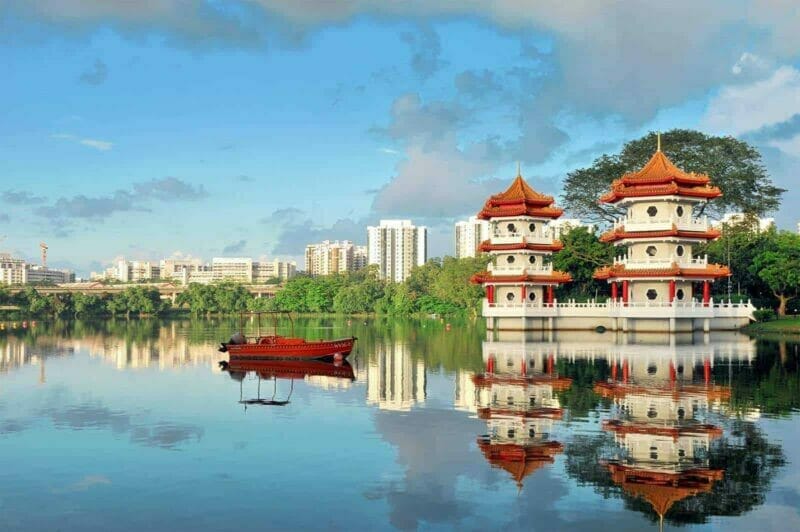
Expats rate as very high its finance, safety and healthcare. School quality is the best in the world and childcare quality is the second best.
But that comes at a price. Raising kids in Singapore is very expensive, making friends is difficult, and the work/life balance is poor – more like a work/work balance. Singapore could be seen as similar to Dubai in this respect, only even more expensive.
Singapore offers a lot for professional expats from all over the world, but it just doesn’t come cheap.
To illustrate: two out of four expats say they can’t afford to buy a property in Singapore but, instead, rent and invest in a property at home
The most common advice for expats planning a move to Singapore is to make sure you negotiate for allowances for schooling and housing as part of your salary package, as the cost of these is prohibitive.
So, if the place is so expensive, why do expats keep flocking to Singapore?
The answer is simple – Singapore is the best place for expats to work if they want to boost their careers. It’s also brilliant for accumulating wealth for your future needs if you go about it wisely.
The trickiest part about living in Singapore is to balance your high income with the high cost of living. You don’t want to deny yourself creature comforts or squander all your hard-earned money to maintain a certain lifestyle.
Parents living in Singapore invest a lot in their children’s education. Expat parents also say that their children’s happiness and well-being are the main reasons to bring a family up in Singapore.
On the negative side, a high cost of living can impact your ability to save for a pension. According to the Expat Explorer survey, more than a third of Singapore’s expats are concerned about being able to set aside enough for their retirement.
Singapore is extremely safe. Petty crimes are rare, streets are safe, even at night, and very well-lit. Police response time is under 10 minutes. Singapore employs Gurkhas as both a special guard force and a counter-terrorist unit. No one wants to mess with them.
You will never ever need to own a car in Singapore. Nor will you want to, because cars and petrol are prohibitively expensive.
Public transport is convenient and cheap. Buses, mass transit trains, taxis, and the local Uber are all you need to commute efficiently wherever you need. Buses and MRT (train) stops are close and strategic.
In short, Singapore is clean, safe, small, mad about food, and family-friendly. A low-tax and high-income spot. But, after a few years of living there, you might find it a bit monotonous.
However, as we have pointed out in our living in Singapore article, this country can be a brilliant opportunity for a professional couple or a young family.
It’s also great if you want to experience Asia from a safety of a Western-style country before moving on to the next step of your expat adventure. Many expats say that, indeed, Singapore is Asia for beginners.
“Singapore is a land of opportunities. However, the competition can be tough, so be prepared. It’s a fast-paced, performance-based society. As long as you stick to the work ethics, you will succeed.”
Juan M., Marketing Director in Singapore
5. Sweden: unparalleled childcare, top for families
Would you like unparalleled childcare quality that comes at a very affordable cost? Then head to Sweden.
Expats rate Sweden number one for both childcare quality and the overall cost of children. It has also been named the top destination for families.
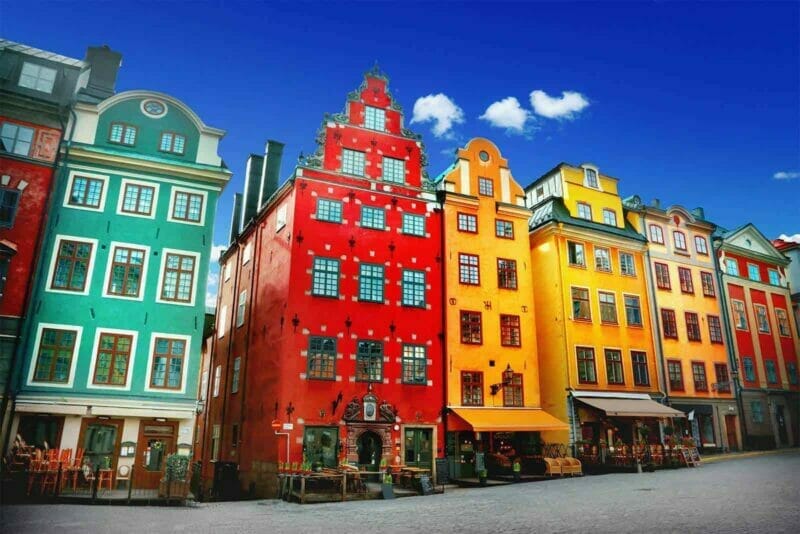
As a bonus, you will also get an excellent work/life balance, solid job security, good health, and a great overall quality of life.
Sweden is a family-oriented culture and is, therefore, perfect if you want to advance your career while raising children.
Drawbacks? Well, don’t count on being able to save a lot for your retirement, enjoying a sizeable disposable income, or anticipating impressive wage growth. That won’t happen.
Sweden is a very socially-oriented country that tries to balance financial stability with the well-being of its people.
It means that social security, healthcare, education, and welfare are highly developed and of good quality. However, they are all paid for out of Sweden residents’ pockets.
As a result, taxes are high, and salaries are lower than in some other EU countries – even for quite skilled professionals – because businesses’ contributions to the welfare state are significant.
On the plus side, Sweden doesn’t have a huge army (it’s not even a NATO member) so you know exactly where your taxes go.
Another challenge is high living expenses that make it hard to find a place to live.
Stockholm, for example, suffers from a severe housing shortage, as do many other parts of the country. If you are planning to move to Sweden, make sure you have enough time to find yourself suitable accommodation.
Then, of course, there’s the weather. Summers are great when the country is full of natural wonders. If you’re a fan of the great outdoors and active pastimes, Sweden is where you’ll be happiest in summer.
Winters, however, are truly grim, dark, and cold and impact everyone’s morale. Swedes turn to drinking, and expats turn to moaning (and then drinking too).
The further north you go, the worse it can be.
In some northern parts, above the Arctic Circle, you might get as little as three hours of sunlight per day. It’s probably wise to limit your northern expansion to Stockholm.
The alcohol industry is state-owned in Sweden. As a result, alcohol is shockingly expensive – so much so that it has boosted the Scandinavian ‘alcohol tourism’: Swedes don’t mind driving all the way to Germany to buy cheaper booze.
There are even special liqueur stores just beyond the German border which specialize in Scandinavian booze trips. If you ever find yourself on such a trip – congratulations, you have become truly local.
Learning the language is invaluable if you want to stay in Sweden long-term and integrate into the community. Most locals speak a bit of English, and if you are an IT specialist, English will be your main work language.
However, if you make an effort to learn Swedish, you’ll be surprised how much it can help to make Sweden your home.
Swedish people do expect foreigners settling here to learn the language, and the state offers SFI courses (language instruction for newcomers) for free. Integration and making friends can be a bit difficult in Sweden. So, again, learning the language is a good starting point.
Although Swedes are polite, they don’t do small talk (a big shock if you come from the UK). They may seem reserved or even cold but once you’ve made local friends, you’ll find them loyal and great company.
Work/life balance is excellent in Sweden. Don’t be surprised if the office tells you to call it a day at 4 pm. Some companies even experiment with six-hour working days.
If you decide to have a baby while in Sweden, you will have 480 days of parental leave, divided between you and your partner.
“Sweden is a place that embraces comfort, together with sustainability. Learn the way things work here and be patient – it takes time to make friends here.”
Sally and Brian W., an English Teacher and an Enterprise Architecture Consultant in Stockholm, Sweden
4. Canada: somewhere between Europe and the U.S.A
It’s mostly urban Canada that attracts professional expats. Canada’s urban communities are extremely diverse, welcoming, and tolerant – live and let live, and the lifestyle in Canada is quite attractive for many expats.
This is a highly politically correct country, so it’s wise not to criticize somebody or something too much in a conversation. Unless, of course, it’s Canada’s big neighbor being criticized – then go for it. Judging the U.S.A. can be a great way to blend in!
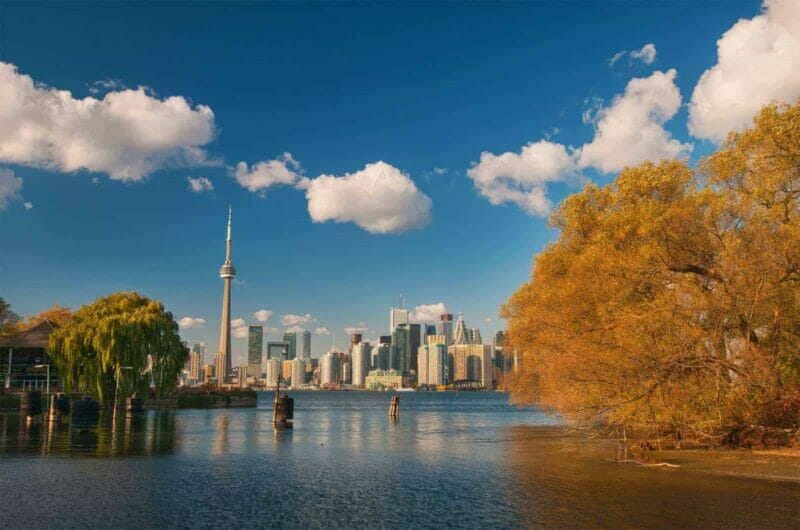
You will find Canada a great place to raise a family. The country is generally safe, open-minded, family-oriented, and outdoorsy. Education is good, sports activities for kids and adults are awesome, and healthy lifestyle opportunities are plentiful.
Canada is rated highly for its entrepreneurship and overall quality of life. Employment opportunities are generally good, especially in the sectors of manufacturing, construction, natural resources, commerce, information technology, and service.
However, the overall job market is still relatively small. If you are a highly specialized and ambitious professional, you might struggle to find a position suited to your degree and expertise.
If you are planning to move to Canada, it definitely makes sense to try to secure employment beforehand.
We have discussed in detail various Canada visa programs specially designed to help talented people who want to start their own businesses or immigrate to Canada as qualified professionals.
Overall, Canada is not a country where you can quickly build up personal wealth or dramatically advance your career.
It is performing adequately when it comes to wage growth; however, disposable income and savings opportunities are mediocre.
It’s the right country, though, if you want a slower pace of life, fresher air, the great outdoors, happy, active, well-schooled kids, and a good work/life balance – much better, for instance, than in the U.S.
Canada boasts a high happiness index, low crime rates, good healthcare, low infant mortality, good life expectancy, relatively high median household income, and upward social mobility.
From a social viewpoint, Canada sits somewhere between Europe and the U.S. It’s a very good country for the middle classes, as most essentials are both public and universal.
Canadian residents have a social safety net – employment insurance, welfare, and healthcare insurance are all paid out of taxes. However, it’s wise for most expats to take out private health insurance in Canada.
Consequently, taxation in Canada is pretty high, and its impact on your income is noticeable. However, most Canadians don’t complain and actually feel proud that they pay their share to look after each other.
You will also find Canada somewhat expensive whilst the general level of services (both public and private) might seem slightly wanting.
Integration is not as easy in Canada now as it used to be, and some expats say that making friends can be a bit difficult. The best way is to be proactive, adopt local ways, get to know the culture and societal norms, and discover where to meet people. Oh, also, make sure you learn about poutine and hockey!
Canada is a country dependent on immigration. Planned correctly, your move to Canada shouldn’t be difficult. It just takes time and patience. Our Living in Canada guide will help you plan your move and give you a few useful tips.
Living in Canada, you get to enjoy some of the most breathtaking landscapes in the world – the wilderness and natural wonders might be some of the best you’ll see in your lifetime. For this reason, nature enthusiasts love retiring to Canada.
Having four distinct seasons is great – but most veteran expats will tell you to spend at least one winter in Canada before committing – it can be brutal.
Also, social life in Canada may prove a little disappointing, consisting mostly of outdoor activities, sports, American TV, and shopping. Some expats even say life in medium or small towns is boring. The big cities can be terribly expensive to live in, but at least they are vibrant.
“Canada is a big and diverse country. To fit in you need to be open-minded and non-judgemental. Important – learn to manage your own taxes.”
Steve B., a Software Developer in Vancouver, Canada
3. Australia: where you work to live
The third best country on our list for expats to live and work is Australia.
Australia has always been a great destination for those in search of a better lifestyle. It provides near-perfect weather, cultural diversity, and laidback life. It’s a star among expats when it comes to quality of life, integration, and health.

Money-wise, you can count on certain wage growth and disposable income but saving opportunities aren’t as good.
Australia’s strongest suit is its work/life balance. In Australia, you work to live, not on the contrary. Add to this fabulous coastal living, and it will make up for any monetary drawbacks.
Community means a lot. People are friendly and helpful. When you first arrive, Australians might seem a bit too curious, but it’s because they have already assumed you are part of the community, so they want to know you better.
Australians are very egalitarian and expect you to treat all people, no matter whether they are collecting your bins or the Prime Minister, with the same level of respect.
It’s a generally happy country. Everyone is so friendly and annoyingly cheerful all the time, and there’s no escaping it. So just join in, and you’ll very quickly come to love it.
If your neighbors invite you to a party and ask you to bring a plate, it’s not because there’s a shortage of crockery. You are expected to bring a plate full of party food to share.
Social security, healthcare, and education are generally of high quality. As they are paid out of the taxpayer’s pocket, taxes are quite high. But, as in Canada, in Australia, people don’t complain and are proud to look after each other.
When it comes to employment, take a job you really want to do. Don’t just grab the first opportunity that comes your way in the hope of progressing up the career ladder. Career advancement is pretty unhurried in Australia, so be prepared to take it slowly.
Finding a job in Australia before moving can make the move and settling down much easier.
Are you a cycling health fanatic who finds kale not just edible but delicious? You’ll fit right in. Australians are very keen on sports and a healthy lifestyle.
The country is well organized, and this is because everyone follows the rules. And if you don’t, you’ll soon get acquainted with the local police. Know the rules, and don’t be tempted to break them even a bit. You will be fined for going 3km over the speed limit, no excuses.
Talking of driving, cars are expensive in Australia, and so is petrol. Although public transport is pretty good in big cities, elsewhere it’s patchy, so you’ll have to invest in your own car.
If you’re a professional after a well-paid job, you’ll want to live in a city. Australian cities are expensive places to be. Renting or buying your own place is too.
Private schools don’t come cheap, either, so make sure you have access to state education for your kids.
The Australian climate and lifestyle attract not just professionals but also those looking for a peaceful retirement. You have to choose carefully where in Australia you want to live depending on the desired lifestyle.
Although it’s not easy or cheap, it’s still possible to retire to Australia if you can afford it. We have outlined all the options available to expats in the How to Retire to Australia guide.
“The most valuable things are your working experience and relevant qualifications in whichever field you specialise. When choosing where to live, consider the cost of living, housing market, employment opportunities and weather conditions.”
Vicky and John S., Healthcare Managers in Sydney, Australia
2. Germany: the leader in job security
Germany is a very balanced country regarding wealth-building opportunities, career progression, childcare, work/life balance, and family. For each of these, Germany sits solidly in the top 10. It’s also the leader in job security.
This all means that, unlike previous countries in this list where expats face the choice between wealth-building and quality of life, Germany offers the whole package.
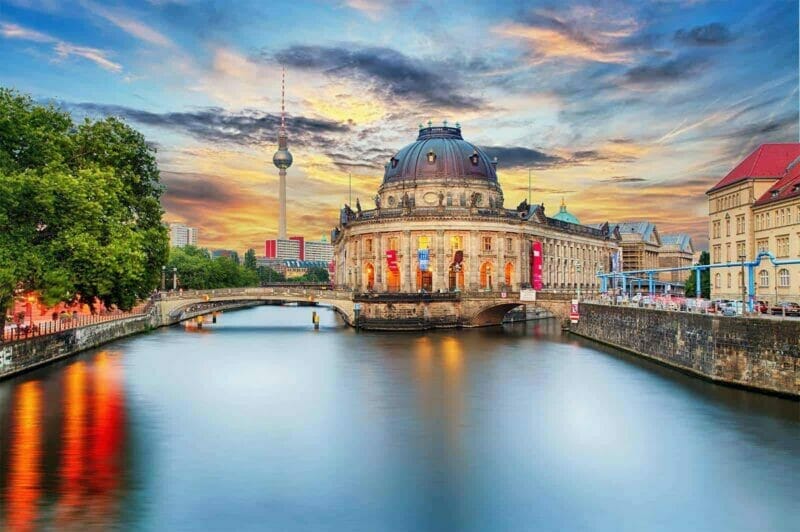
Maybe your savings in Germany won’t be as substantial as Dubai expats can count on, or the quality of life won’t quite reach Australian standards.
However, in Germany, you are able to have a good disposable income, save for your future, develop your career, give your children a great education, and enjoy a generally good life.
Germany’s rich culture, natural beauty, and comprehensive social security are very appealing to expats.
Germany scores incredibly well across many economic and lifestyle categories.
Working in Germany can have many advantages. However, this is also a place where you really need to learn and accept local ways in order to thrive.
Make sure you’re ok with a strict, rule-based society – or else be prepared to be told off by neighbors or even strangers who happen to disapprove of your ‘out-of-order’ behavior.
‘Out of order’ covers a very wide spectrum in Germany: not flattening your boxes in the recycling bin, leaving your apartment doormat outside on Fridays when they clean the public staircases, not clearing the pavement in front of your house of ice or snow in winter, mowing your lawn on Sundays…
Some things you might consider to be benign mishaps are illegal in Germany, such as running out of fuel on an autobahn.
Other things that might seem shocking to you are perfectly acceptable. Jumping the queue, for instance, is a horrible crime in the eyes of Britons but tolerated in Germany.
Rules are the foundation of German society, so learn them as quickly as you can. It will keep you out of trouble and help you integrate quicker at work and in your neighborhood.
Most locals are easy-going and friendly and do speak English. However, it’s important to learn German if you plan to stay in the country long term.
There’s a material advantage to learning a local language, whichever country you are working in, and, generally, you’ll get a better job if you speak the local language/s.
According to The Economist, the lifetime return on investment (ROI) in learning a new language is a staggering $67,000 – and German has the highest ROI of $128,000! Learn German, and not only will you be happier in the community, but you will also be wealthier.
Be ready to deal with the German bureaucracy. It can be pretty inflexible, but again, you just need to learn the ropes. Make sure you take every important document with you to each government authority. You never know what they might need. Preparation is key and saves time and hassle for everyone involved.
Living in Germany, you will enjoy solid social security, good healthcare, and a great work/life balance.
While building a rewarding career, you will still have plenty of free time to spend with your family. It’s not uncommon for employees in Germany to enjoy up to 14 public holidays a year, plus 30 days of paid holidays – that’s six to seven complete weeks off work a year.
One of Germany’s biggest advantages is its location – it’s the perfect country to position yourself if you want to travel around Europe. You can easily drive to most European countries and spend delightful weekends in cities such as Rome, Paris, and Vienna.
The possibilities for holidays are plentiful – from lush Mediterranean beaches to Alpine skiing holidays or Christmas breaks in Scandinavia. Everything is on your doorstep.
Schools are good, universities are free, and children are generally very well looked after in Germany.
“If you’re moving to Germany, be prepared to embrace the culture, don’t just dismiss it. Germans see and do things in a different way. Once you understand the nuances of this amazing country and its people, you will feel comfortable and a part of society. And then you will truly enjoy Germany and all the opportunities it has to offer.”
Andrew M., works in banking in Frankfurt, Germany
1. Switzerland: financial well-being and a safe environment
Yet again, Switzerland is our number one expat destination in the world.
In many ways, Switzerland is like Germany, only more prestigious – and thus much more expensive.
So, the first and most important thing any expat should do when considering relocation to Switzerland is to research the cost of living against their prospective income.
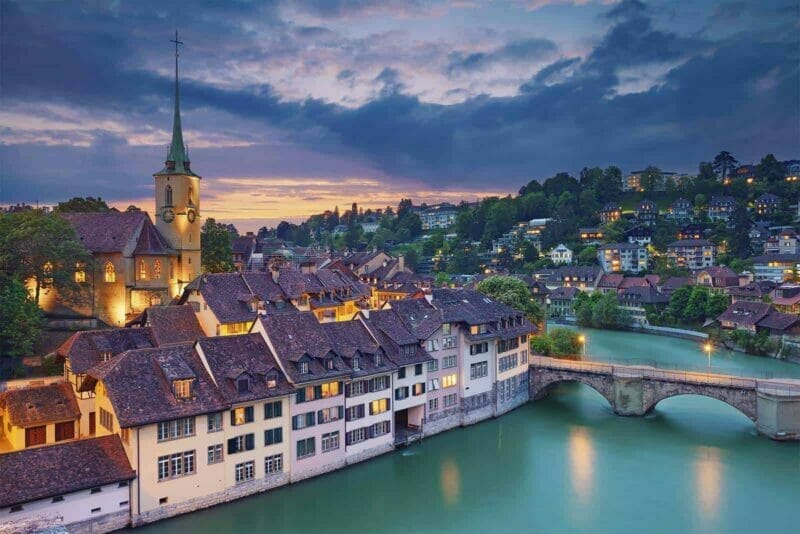
If you’re a highly sought-after specialist with rare skills and expertise in fields affected by local skills shortages, then your income should allow you to prosper in Switzerland.
Expats say Switzerland is the best destination if you want to combine wealth-building opportunities with career advancement while enjoying a high quality of life.
Of course, nowhere is ideal, and living in Switzerland has its pros and cons. However, for professionals who want to maximize financial well-being and career opportunities while raising a family in a safe environment, Switzerland can be just the right country to live in.
Living in Switzerland has many benefits, including the highest average income in the world – although, once you take taxes into consideration, Switzerland slides to sixth place in Expatra’s Best Countries to Work to Make Money ranking.
Nevertheless, there’s no denying that working in Switzerland is financially rewarding. It will propel you up the career ladder, and you’ll enjoy a great quality of life during your ascent.
There are, of course, sacrifices to be made. You’ll definitely find raising children to be pretty expensive. Making friends – for both you and your kids – can be difficult, too, as Switzerland is a pretty tough country in which to integrate.
However, if you can find ways to overcome childcare challenges, you’ll find your children fare very well in Switzerland. Many expat parents comment on how happier and healthier their kids are after a move to the country.
Another important factor to consider is the quality of education. It’s great. State schools are free and taught in the main language of the individual region (French, Italian, German, or Romansh). From early on, students also learn one of the other official Swiss languages, as well as English.
If you are there long-term, state schools are the perfect option.
And if you are after something more exclusive, what could be better than a Swiss private school? Their global reputation is high (and so are the fees), and your child will get a personally tailored education.
Another option is one of the many international schools. If the company that relocates you is large and reputable, school fees might be covered by your employer.
Living in Switzerland, it’s easy to adopt the country’s luxury lifestyle and get used to the first-class infrastructure. What you will find hard is integration.
Making friends with locals is both a difficult and lengthy task, so many expats just don’t bother. There are plenty of expat communities in which to socialize: they are welcoming and will make you feel at home very quickly.
Another drawback is the high cost of… everything! Rentals and living expenses are among the highest in Europe. Food and services are also expensive – but at the end of the month, you’re still likely to have more money left than ever before.
Switzerland is safe. Of course, crimes happen there as in any other place, but they are rare. The biggest crime in most Swiss cities is bike theft.
Love the outdoors and long nature walks? There’s no better place for you. The country has hundreds of beautiful blue lakes, mountains, rivers, forests, and hiking trails, and you can enjoy the outdoors all year round.
If you are employed in Switzerland, you will have plenty of opportunities to be with your family or travel, or just enjoy life. Employees get paid holidays of at least four weeks (20 days) per year and you won’t work long hours – usually until 4-5 pm.
Don’t forget, though, that it’s not just corporations enjoying short working hours: most shops shut in the afternoon too. Switzerland is a quiet, peaceful place, too much so for some expats, who dubbed it a “global retirement village” – worth remembering if you’re the urban type.
Learning the language (be it German or French, depending on where you live) can help a lot in everyday life, especially when you’re settling in.
It might be difficult to find an apartment to rent, especially in competitive urban areas such as Lausanne and Geneva, where the rental vacancy is less than one percent of the total market volume.
But if you manage to lease an apartment, you’ll enjoy very good housing conditions.
The quality of residential buildings and their maintenance is superb. There are federal laws regulating the indoor temperature of rental housing, and both the interiors and exteriors of the buildings must be regularly refurbished.
The Swiss rental market is regulated by the state. Rent increases are controlled by a rate pegged to the average interest rate of current mortgage loans. As mortgage loan rates go up or down, they are followed by the rental reference rate.
Your rent won’t adjust itself automatically, however. If there’s an increase, your landlord will surely notify you as soon as possible. But if there’s a decrease, you’ll have to proactively contact your landlord to ask for a reduction. Nor does such a request work every time: landlords can justify a higher rent because of maintenance expenses.
Apart from the rent adjustment system, everything else in Switzerland just works. Trains are on time, everything is clean, and you can trust that what is said is what is going to happen.
In general, Switzerland is truly a great country to live in. It has its pros and cons, like anywhere else but if it’s your kind of place, you can really find a balanced and rewarding life here.
“Good quality healthcare, accessible education, crimes unheard of, etc. It’s a great country to be in. I wish it were a bit more accepting and less rule-based.”
Manish R. J., Risk Management MD in Zurich, Switzerland
So have you picked a country?
Choosing your next destination can feel daunting: there’s a lot to take into consideration. Your career and wealth-building goals, plus your family’s well-being, your future perspectives, and long-term objectives – all are important, and balancing them might prove difficult.
However, the best part about being an expat is that you get to experience different countries and cultures, live your life to the fullest, test your abilities, and discover the world.
Of course, you should do thorough research when preparing to move to another country. Country rankings like ours can be a good start to see whether the country you’re thinking about fits in with your expectations and goals.
It’s also worth reading expat forums, taking advice from local expats, and talking to those with personal experience.
However, there’s always the risk that the country you have chosen won’t agree with you. Or that your life priorities change, and you’re now looking for something different. Being a transient bunch, in such cases, expats usually pack up and move on.
The best bit about being an expat is that there’s the right location for every stage of your life – be it career-building, accumulating wealth, raising a family, or retiring to your dream destination. You just need to find your personal best country to live in.
Expatra’s Best Countries to Live in: How our ranking works
Expatra’s Best Countries is predominantly based on readers’ feedback, backed by Expat Explorer Survey results, Human Development Index, and the US News and World Report Best Countries.
We have included the countries that:
- have achieved the highest ratings from our readers
- are ranked high in the Expat Explorer Survey
- have a medium to high Human Development Index
- and demonstrate good scores in US News and World Report Best Countries 2022.
The exception is Bahrain, which isn’t in the US News and World Report Best Countries to Live in 2021. However, it scores highly both in our readers’ feedback and Expat Explorer Survey and has a medium Human Development Index.
We’ve factored in the Human Development Index for several reasons. It looks at the life expectancy, education, and income per capita indicators of various countries.
This index doesn’t have a direct impact on expats’ quality of life; however, many expatriates point out that they feel more comfortable living and working in countries with a medium to high Human Development Index, as it has an influence on their safety, health, ability to integrate and general levels of happiness.
Expatra’s Best Countries Rating also takes into consideration how global perceptions define countries. Perceptions are important as they have the potential to drive trade, travel, and investment and directly affect national economies, thus influencing the quality of life of both expats and locals. We used the findings of US News and World Report Best Countries to identify the countries with positive global perceptions.
If you have any comments or feedback or would like to tell us about your own experience of living abroad, please comment below or contact us. Your feedback is invaluable and will be used to update Expatra’s Best Countries ranking next year.
You might find useful:
If you’re looking for further inspiration, our best-of lists are a great place to start.
- Best Places To Retire In The World
- The Guide To EU Golden Visa Schemes For Non-EU Citizens – compare EU Golden Visa programs to find the one that suits you best.
- The Best Countries To Work In The World
- 5 European Destination With Great Weather All Year
- The Cheapest Countries To Retire To
- Best Countries To Retire In Europe: Top Picks For A Great Retirement
